Research
ITA Diary Study
Understanding day-to-day advisor workflows through longitudinal research
Overview
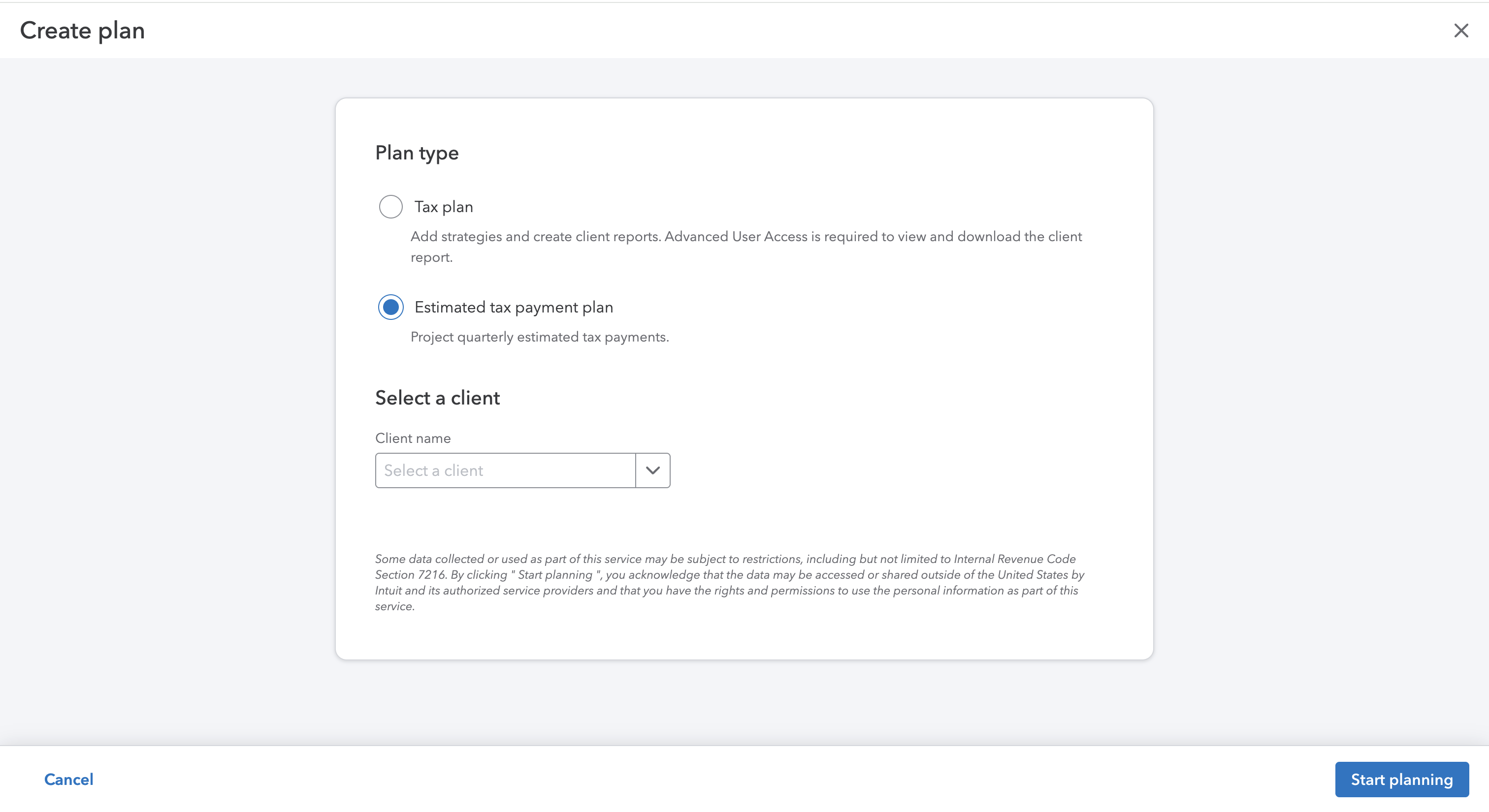
Over the course of 18 weeks, we observed 14 tax professionals new to Intuit Tax Advisor (ITA) as they got accustomed to the software, attempted to incorporate it into their workflows, and evaluated its usefulness to their practice.
The study was designed to go beyond what traditional interviews could capture. We wanted to understand the real-time, evolving experience of advisors using ITA with actual clients — their frustrations, workarounds, and moments of delight as they formed opinions about the product over time.
The Challenge
How might we understand the areas of opportunity to improve the customer experience for more complex parts of the user journey that require extended time with the product?
Prior research methods like in-depth interviews offered point-in-time snapshots, but couldn't capture how advisor sentiment and behavior shifted as they spent more time with the product. We needed a longitudinal approach that would reveal how trust, confidence, and usage patterns evolved over an extended period.
Methodology
We recruited 14 tax advisors across three staggered cohorts, ranging from early career advisors to seasoned professionals with 30+ years of experience. Each participant used ITA with real clients over the study period.
Our approach combined multiple touchpoints to build a rich, longitudinal picture:
Weekly diary surveys
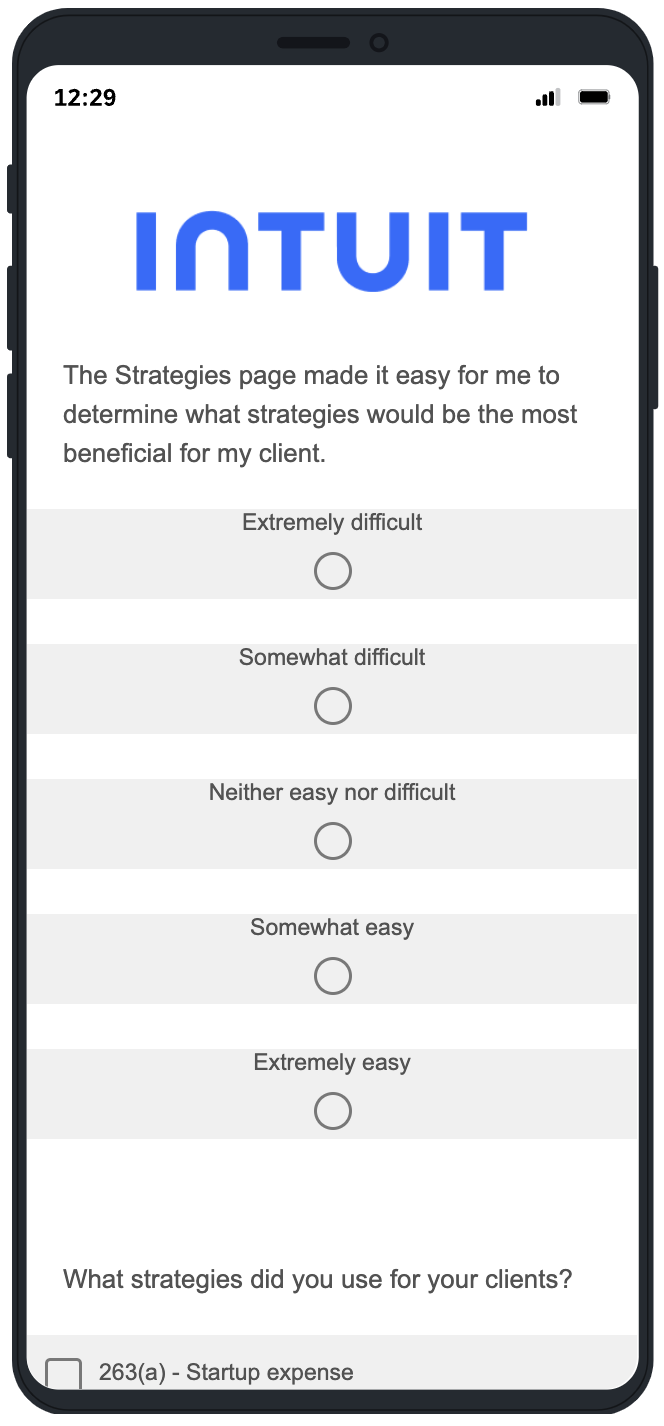
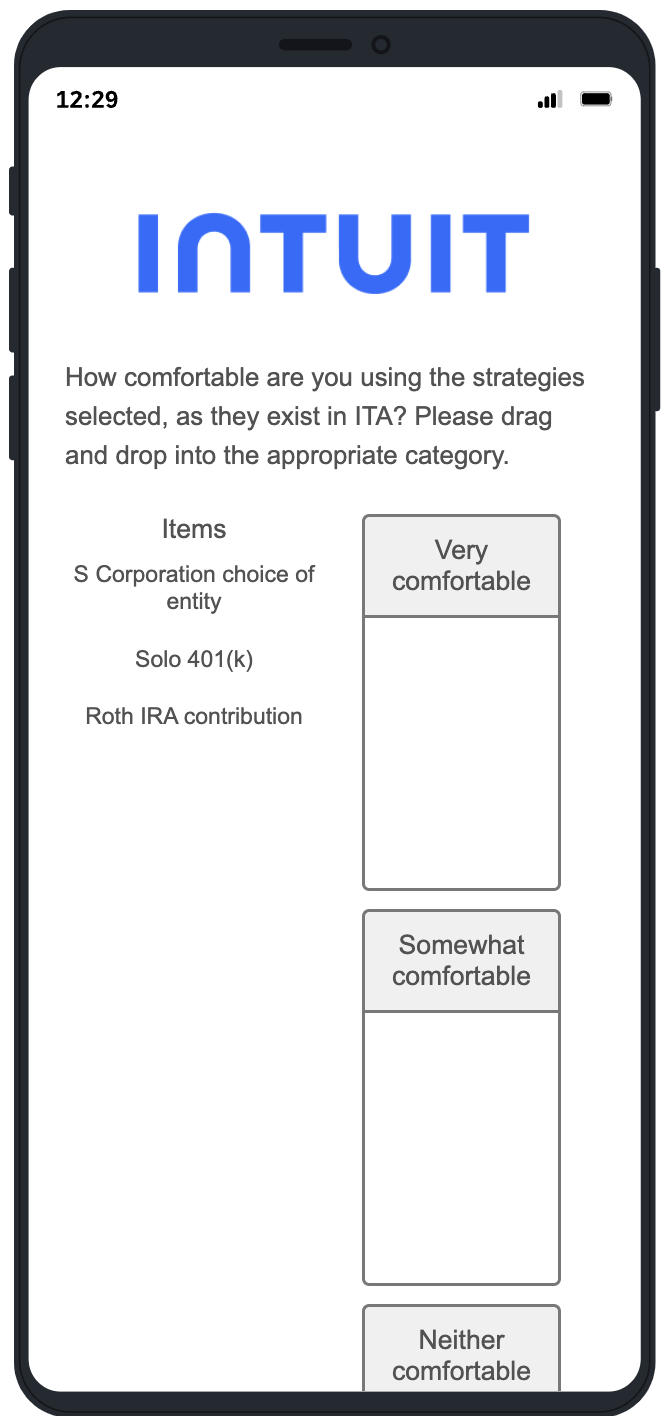
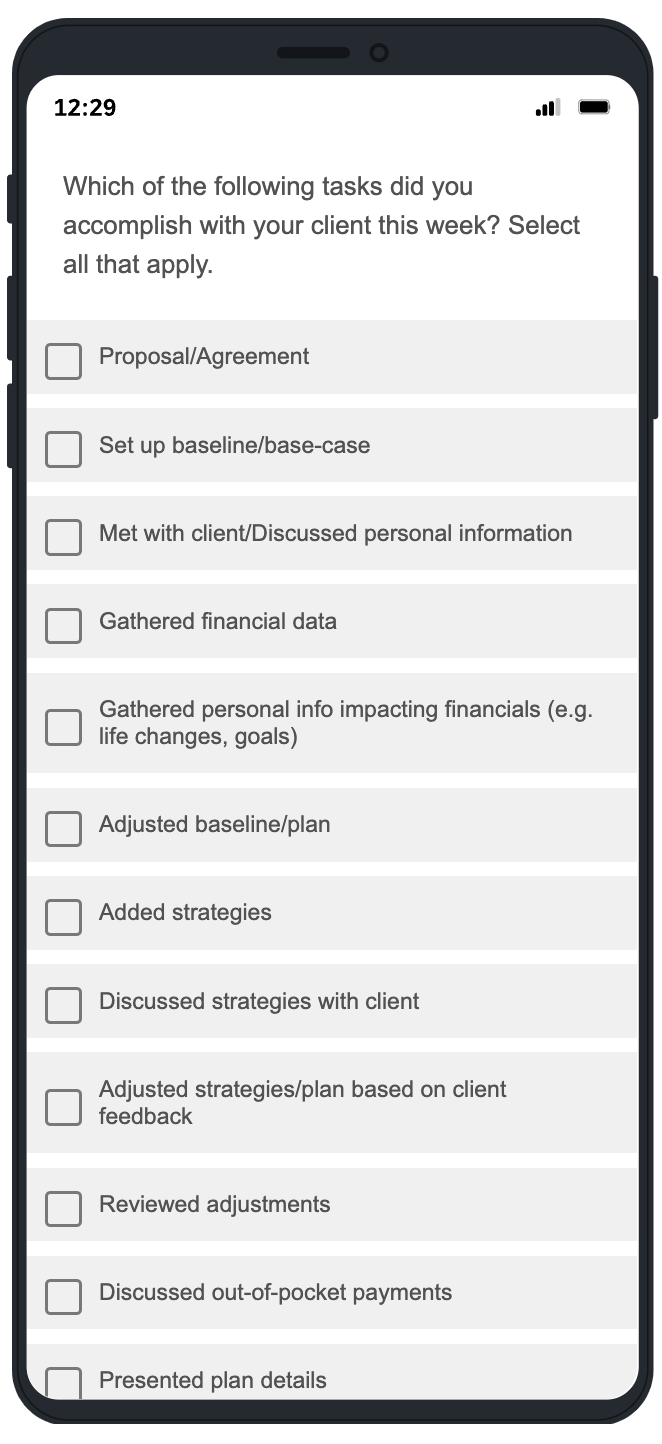
Structured questionnaires capturing ease-of-use scores, strategies used, tasks accomplished, and open-ended reflections
Bi-weekly check-ins
Conversations to probe deeper into survey responses, understand context, and track sentiment shifts
Client reaction tracking
Documenting how advisors' clients responded to deliverables and recommendations generated through ITA
Post-study debriefs
Comprehensive interviews reflecting on the full arc of the experience and likelihood of continued use
Survey Design
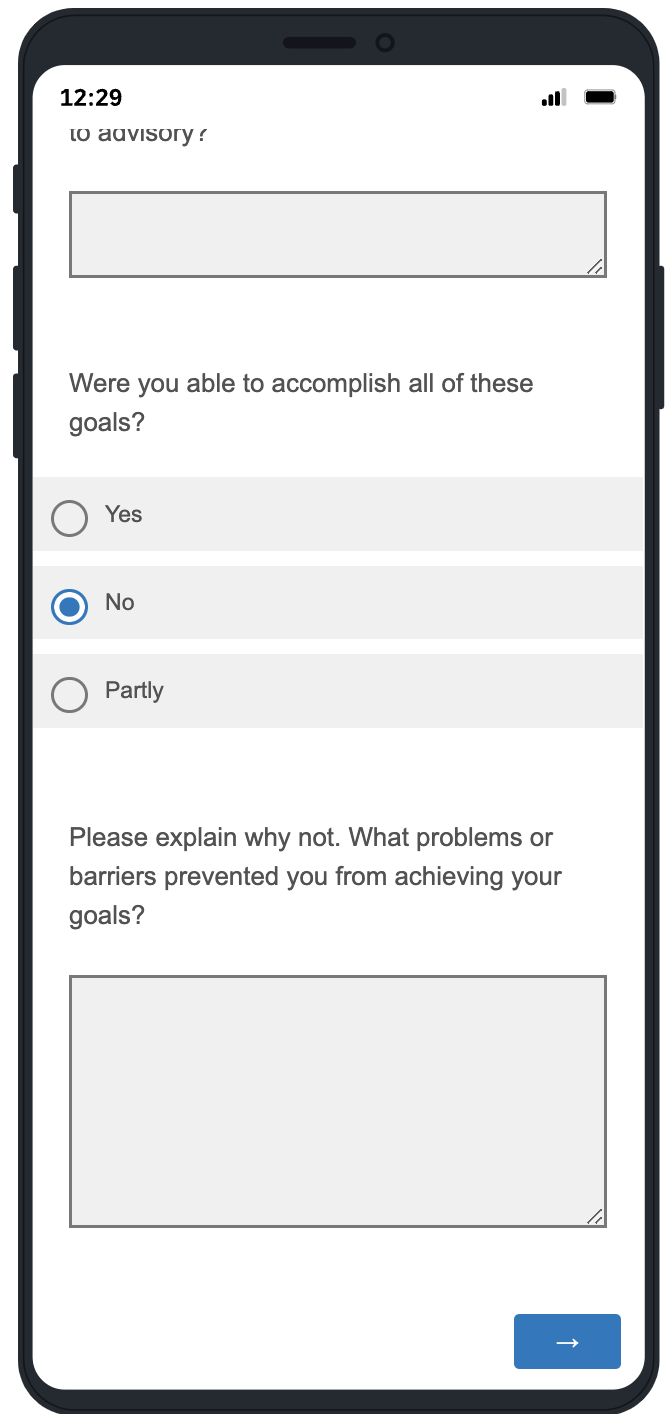
The weekly diary surveys were designed to capture both quantitative metrics (CES scores, task completion) and qualitative reflections. The mobile-first format made it easy for busy advisors to log entries between client sessions.
Defining the Segments
A key finding was that two distinct behavioral segments emerged among participants — not just by years of experience, but by how they approached advisory, what they expected from ITA, and where they found (or lost) value.
Early Career Advisors
- In their first 1–2 years of advisory
- Little to no existing advisory process
- View ITA as an educational tool
- Have explicit goals for growth
- More forgiving of software limitations
Advanced Advisors
- 5+ years of advisory experience
- Have an established process and vetted tools
- Want ITA to augment their existing workflow
- Quick to spot calculation errors
- Higher risk of trust erosion
Sentiment Over Time
The longitudinal nature of the study revealed strikingly different emotional arcs for the two segments. While both groups started with excitement, their paths diverged sharply.
Early Career Journey
😁
🤔
☺️
🤔
☺️
Excited to explore
Learning strategies
Filling knowledge gaps
Noticing inconsistencies
Sees value, continues use
Advanced Advisor Journey
😁
🤔
🤨
😠
🫥
Excited to explore
Moves to complex cases
Spots errors
Loses trust
Reverts to old tools
Key Findings
Trust erodes faster than it builds
Advanced advisors who encountered calculation errors or nonviable strategy recommendations quickly lost confidence in the tool. Some reverted to their pre-established methods entirely, citing risk to their credibility with clients.
"The difference in tax calculated could not be resolved, leading to a lack of trust on ITA's ability to generate the correct analysis."
ITA is more immediately valuable to early career advisors
Newer advisors viewed the tool as educational — filling gaps in their knowledge, surfacing strategies they wouldn't have considered, and providing polished deliverables they didn't have templates for. All early career participants rated a 5/5 likelihood of continued use.
"ITA brought up several tax strategies that I would not have thought to suggest."
Scenario planning is a critical unmet need
The majority of advisors' clients seek planning for specific financial situations rather than broad reviews. ITA's single-scenario workflow felt limiting, and many pros created workarounds like duplicating client returns to compare different approaches.
"Currently, ITA's workflow is very singular."
The deliverables are a standout, but need refinement
Client-facing proposals and tax plans were well received across both segments. Early career advisors found them transformative, while advanced advisors wanted more data visualization, layman's-term explanations, and the ability to temper explicit savings figures that could set unrealistic expectations.
Both segments need strategy implementation guidance
71.4% of participants expressed a desire to be involved in the implementation process. There was a clear gap — ITA surfaced what strategies to pursue, but not how to execute them. Advisors wanted actionable next steps within the tool to communicate to their clients.
Opportunities Identified
Based on the data and feedback collected throughout the study, we identified several areas of opportunity spanning both segments:
Impact & Reflections
The study provided a depth of understanding that our working teams hadn't previously had — not just what advisors thought of ITA at a single point in time, but how their relationship with the product evolved as they used it with real clients under real conditions.
Findings directly informed the product roadmap, with several of our quick-win recommendations being prioritized for upcoming releases. The segment-level insights helped the team think more intentionally about who they were designing for and how to meet both audiences where they are.
Perhaps most importantly, the longitudinal format gave us something a single study never could: the ability to watch trust form and fracture in real time. That narrative power made the findings resonate with stakeholders in a way that felt immediate and undeniable.
A positive signal:
Overall sentiments and experiences trended more positively across the three cohorts, as newly added or refined features were noticed and appreciated by later participants — validating that the product team was moving in the right direction.